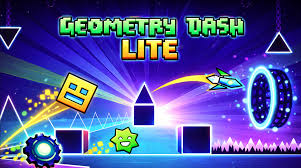
| Mastering the Beat: Geometry Dash Lite |
|  | |
The world of mobile gaming is vast, offering everything from sprawling RPGs to intricate puzzles. But sometimes, you just want something that’s pure, a game that challenges your reflexes and tests your rhythm. That’s where geometry dash lite comes in. This deceptively simple platformer has captivated millions with its pulsing electronic soundtrack, vibrant visuals, and infuriatingly addictive gameplay. If you've ever seen someone frantically tapping their screen with a focused intensity, chances are they were navigating a tiny square through a gauntlet of spikes and saws.
https://geometrylitepc.com/
This article is your friendly introduction to this captivating title. We'll explore what makes it tick, how to get started, and some essential tips to help you conquer even the most daunting levels. Whether you're a seasoned gamer looking for a new challenge or just curious about what all the fuss is about, let's dive into the exhilarating world of Geometry Dash Lite.
What is Geometry Dash Lite? A Symphony of Spikes and Sounds
At its core, Geometry Dash Lite is a rhythm-based platformer. You control a small, geometric icon – most commonly a square – through a series of auto-scrolling levels. Your only interaction with the game world is a single tap or click, which makes your icon jump. Sounds easy, right? Think again.
The beauty (and brutality) of Geometry Dash Lite lies in its precise timing and intricate level design. Every jump, every flight, every flip needs to be perfectly synchronized with the level's obstacles and the pulsating electronic soundtrack. One misstep, one tap too early or too late, and your icon shatters into a million pieces, forcing you to restart from the beginning of the section.
The "Lite" version of the game offers a fantastic taste of the full experience, featuring a selection of levels that progressively increase in difficulty. It’s an excellent way to get acquainted with the mechanics before deciding if you want to invest in the paid version, which boasts a level editor and access to an enormous library of user-created content. If you're looking to explore this world on a larger screen, you can even find versions adapted for various platforms, giving you a different perspective on the action.
Gameplay: Tap, Jump, Repeat (and Repeat Again)
The core gameplay loop of Geometry Dash Lite is straightforward:
1. Choose a Level: The Lite version presents you with a series of pre-designed levels, each with its own unique soundtrack and visual theme. Start with "Stereo Madness," the easiest level, to get a feel for the controls.
2. Control Your Icon: As the level scrolls, your icon automatically moves forward. Your only job is to jump by tapping the screen.
3. Navigate Obstacles: Spikes, saws, moving blocks, and even gravity portals will stand in your way. Each requires precise timing to avoid.
4. Change Forms: Throughout the levels, you'll encounter portals that transform your icon. These can turn you into a rocket (allowing you to fly by holding down), a ship (similar to a rocket but with different physics), a ball (which flips gravity with each tap), a UFO (which mini-jumps with each tap), or a wave (which moves diagonally up and down). Mastering these different forms is crucial.
5. Collect Coins (Optional): Many levels feature hidden coins. Collecting these adds an extra layer of challenge and can sometimes unlock new icons or colors in the full game.
6. Die and Retry: This is perhaps the most important aspect of Geometry Dash Lite. You will die. A lot. Embrace it. Each death is a learning opportunity, a chance to understand the timing and anticipate the next obstacle.
The visual feedback is immediate and satisfying. When you successfully navigate a particularly tricky sequence, the rush of adrenaline is palpable. When you fail, the explosion of your icon is a clear signal to try again.
Tips for Aspiring Dashers
Conquering Geometry Dash Lite takes practice, patience, and a bit of strategic thinking. Here are some tips to help you on your journey:
Start Slow: Don't jump straight into the hardest levels. Master "Stereo Madness" and "Back on Track" before moving on. Each level introduces new mechanics and challenges that build upon previous ones.
Listen to the Music: The music isn't just background noise; it's your guide. Many obstacles are timed to the beat, so paying attention to the rhythm can significantly improve your chances of success.
Practice Mode is Your Friend: Geometry Dash Lite offers a practice mode where you can place checkpoints. This allows you to break down difficult sections and practice them repeatedly without having to restart the entire level. Utilize this feature religiously.
Learn the Patterns: Many sequences of obstacles have predictable patterns. After a few tries, you’ll start to recognize these patterns and instinctively know when to jump.
Don't Get Frustrated (Easier Said Than Done!): Geometry Dash Lite can be incredibly frustrating. Take breaks if you find yourself getting angry. A fresh mind often performs better. Remember, it's about the journey and the satisfaction of overcoming a challenge.
Watch Others Play: There’s a massive community around Geometry Dash. Watching YouTube videos of skilled players can provide valuable insights into level design and optimal routes.
Experiment with Icons (in the full version): While Lite has limited options, in the full game, different icons have different visual cues that some players find easier to track. Find what works for you.
Focus on the Immediate Future: Instead of looking too far ahead, focus on the next few obstacles. Overthinking can lead to mistakes.
Conclusion: A Rhythm Game for Everyone
Geometry Dash Lite is more than just a game; it's a test of focus, reflexes, and perseverance. Its simple controls hide a depth of challenge that keeps players coming back for "just one more try." The satisfaction of finally beating a level that once seemed impossible is incredibly rewarding.
So, if you're looking for a game that will challenge your limits, get your heart racing, and make you feel like a rhythm-tapping legend, give Geometry Dash Lite a try. You might just surprise yourself with how much fun you have as you master the beat and conquer the spikes. Happy dashing!
by Brian G. Morgan | |
7月25日(土)13:10 | 掲示板 | 管理
|
コメントを書く (現在0件) (現在0件) |
| Rhythm and Reflexes: Learning to Love the Geometry |
|  | |
https://geometrydash-pc.com/
There's a moment in every rhythm game fan's life where the screen blurs, the music syncs with your heartbeat, and you realize your fingers are moving faster than your conscious brain can keep up. That moment — the geometry jump — is the soul of an entire genre of gaming, and no game captures it quite like Geometry Dash. If you've ever watched a gameplay video and wondered how on earth someone navigates those spike-lined corridors at breakneck speed, or if you've tried it yourself and felt like your reflexes just aren't cut out for it, this article is for you. Let's break down what makes geometry jumping tick, how to approach it without losing your mind, and why the struggle is genuinely part of the fun.
What Actually Is a Geometry Jump?
At its core, a geometry jump is what happens when a game asks you to move a shape — usually a square, a ball, a ship, or a UFO — through a level where timing is everything. The path is filled with platforms, spikes, portals, orbs, and rings, and the only way forward is to press (or hold and release) your input button at exactly the right moment. Unlike platformers where you have room to explore and experiment, geometry jumping is relentless. There's no pause to strategize, no hidden corners to catch your breath. The level moves at a fixed pace, and you either keep up or you crash.
Geometry Dash takes this concept and polishes it into something almost meditative. Every obstacle is choreographed to a soundtrack — usually electronic music with a strong beat — so the gameplay becomes a kind of physical translation of sound. When the bass drops, you jump. When the synth winds up, you switch gravity. When the rhythm shifts, you prepare for a tight corridor. The game conditions you, over time, to feel the level rather than think your way through it.
Gameplay: The Heart of the Asymmetry
If you launch Geometry Dash for the first time, the experience can feel shockingly simple. One button. One action. That's your entire toolkit. You can tap to jump, or you can hold to fly (in certain game modes). That's it. No attack combos, no inventory, no skill tree. So why is it so hard?
The answer lies in how the game layers complexity. As you progress through the official levels — Stereo Madness, Back on Track, Polargeist, and onward — the game teaches you a new lesson each time. Early levels are generous with landing space and forgiving with timing windows. But by the time you hit Clutterfunk or Theory of Everything, the level design becomes a gauntlet of precision demands. You'll encounter:
Gravity portals that flip your character upside down mid-flight
Speed changes that accelerate or decelerate the entire level
Mini and wave portals that shrink your hitbox or change the control scheme entirely
Orbs and rings that activate only when you tap near them, requiring pixel-perfect positioning
Each of these mechanics forces you to recalibrate your timing. What worked in Stereo Madness will get you killed in Electroman Adventures. The game doesn't just test your reflexes — it tests your ability to relearn your reflexes on the fly.
One of the most beautiful aspects of geometry jumping is the trial-and-error feedback loop. You crash. You restart. The music starts again. You crash a little further this time. You restart. Eventually, you're not playing a level — you're practicing a choreographed routine that your hands are memorizing. This is why experienced players can close their eyes and still clear sections. Muscle memory, not conscious thought, becomes the driver.
Tips to Survive and Thrive
If you're new to Geometry Dash or geometry jump games in general, here are some practical pointers that go beyond the usual "just practice" advice.
Play with sound on. This cannot be overstated. The level is built around the music. If you mute the game, you're flying blind — literally. The visual cues are designed to sync with the audio, so turning off the sound strips away half the information your brain needs to time jumps correctly.
Use practice mode. You don't need to suffer through the full level every time. Activate practice mode and place checkpoints at sections you find tricky. Repeat those sections in isolation until they feel natural. This is how speedrunners learn levels that take minutes to complete — they break them down into seconds.
Learn to hold and release. Many beginners think geometry jumping is all about tapping. In reality, holding the button for variable durations is just as important. The ship and wave modes require gentle, sustained pressure — too short and you drop, too long and you crash into the ceiling. Get comfortable with micro-adjustments.
Don't chase completion. This sounds counterintuitive, but chasing 100% completion right away will burn you out. Instead, aim for progress. Clear 10% of a level, then 20%, then 30%. Celebrate small milestones. Geometry jumping is a marathon sport disguised as a sprint.
Try user-created levels. The Geometry Dash community has built millions of levels, ranging from beginner-friendly to impossibly difficult. Searching for "easy demon" or "auto" levels can give you a different flavor of gameplay without the frustration curve of the official roster. You'll also discover creative takes on the geometry jump formula that official levels never explore.
Record your gameplay. Watching your own replays can reveal habits you didn't notice — like a tendency to tap late on blue orbs, or holding the button too long during ship sections. Seeing your mistakes from an outside perspective is one of the fastest ways to improve.
Why It's Worth the Frustration
Let's address the elephant in the room: geometry jumping can be brutally frustrating. You will crash at 97% progress more times than you can count. You will close the game in exasperation and swear you're done. And then, hours later, you'll open it again. Why?
Because those rare moments when everything clicks — when your tapping aligns perfectly with the beat, when you clear a section you've been stuck on for days, when you finally see the victory screen — are genuinely euphoric. The game earns your victories. Nothing is handed to you. Every completed level is proof that you persisted through something that felt impossible, and that feeling transfers into real life more than you'd expect.
The geometry jump, at its finest, is a conversation between you, the music, and the level designer. It demands focus, patience, and a willingness to fail beautifully. If you can embrace those three things, then a game like Geometry Dash isn't just a distraction — it's a practice in how to learn anything difficult, one small jump at a time.
Whether you're here for the music, the challenge, or just to see what the hype is about, remember: every player you've watched breeze through a level started exactly where you are. They crashed. They restarted. And eventually, they flew.
by Jasmine Ball | |
7月22日(水)12:39 | 掲示板 | 管理
|
| 1: Deborahinter
| | |
After reading it, I found that many of my previous questions had been answered. The content is structured logically and is easy to understand. I hope the author continues to develop more interesting topics in the future. clash royale
| |
| by Deborah | Mail | 9月10日(木)13:38
|
| | コメントを書く(現在1件) |
| Rhythm and Reflexes: Learning to Love the Geometry |
|  | |
https://geometrydash-pc.com/
There's a moment in every rhythm game fan's life where the screen blurs, the music syncs with your heartbeat, and you realize your fingers are moving faster than your conscious brain can keep up. That moment — the geometry jump — is the soul of an entire genre of gaming, and no game captures it quite like Geometry Dash. If you've ever watched a gameplay video and wondered how on earth someone navigates those spike-lined corridors at breakneck speed, or if you've tried it yourself and felt like your reflexes just aren't cut out for it, this article is for you. Let's break down what makes geometry jumping tick, how to approach it without losing your mind, and why the struggle is genuinely part of the fun.
What Actually Is a Geometry Jump?
At its core, a geometry jump is what happens when a game asks you to move a shape — usually a square, a ball, a ship, or a UFO — through a level where timing is everything. The path is filled with platforms, spikes, portals, orbs, and rings, and the only way forward is to press (or hold and release) your input button at exactly the right moment. Unlike platformers where you have room to explore and experiment, geometry jumping is relentless. There's no pause to strategize, no hidden corners to catch your breath. The level moves at a fixed pace, and you either keep up or you crash.
Geometry Dash takes this concept and polishes it into something almost meditative. Every obstacle is choreographed to a soundtrack — usually electronic music with a strong beat — so the gameplay becomes a kind of physical translation of sound. When the bass drops, you jump. When the synth winds up, you switch gravity. When the rhythm shifts, you prepare for a tight corridor. The game conditions you, over time, to feel the level rather than think your way through it.
Gameplay: The Heart of the Asymmetry
If you launch Geometry Dash for the first time, the experience can feel shockingly simple. One button. One action. That's your entire toolkit. You can tap to jump, or you can hold to fly (in certain game modes). That's it. No attack combos, no inventory, no skill tree. So why is it so hard?
The answer lies in how the game layers complexity. As you progress through the official levels — Stereo Madness, Back on Track, Polargeist, and onward — the game teaches you a new lesson each time. Early levels are generous with landing space and forgiving with timing windows. But by the time you hit Clutterfunk or Theory of Everything, the level design becomes a gauntlet of precision demands. You'll encounter:
Gravity portals that flip your character upside down mid-flight
Speed changes that accelerate or decelerate the entire level
Mini and wave portals that shrink your hitbox or change the control scheme entirely
Orbs and rings that activate only when you tap near them, requiring pixel-perfect positioning
Each of these mechanics forces you to recalibrate your timing. What worked in Stereo Madness will get you killed in Electroman Adventures. The game doesn't just test your reflexes — it tests your ability to relearn your reflexes on the fly.
One of the most beautiful aspects of geometry jumping is the trial-and-error feedback loop. You crash. You restart. The music starts again. You crash a little further this time. You restart. Eventually, you're not playing a level — you're practicing a choreographed routine that your hands are memorizing. This is why experienced players can close their eyes and still clear sections. Muscle memory, not conscious thought, becomes the driver.
Tips to Survive and Thrive
If you're new to Geometry Dash or geometry jump games in general, here are some practical pointers that go beyond the usual "just practice" advice.
Play with sound on. This cannot be overstated. The level is built around the music. If you mute the game, you're flying blind — literally. The visual cues are designed to sync with the audio, so turning off the sound strips away half the information your brain needs to time jumps correctly.
Use practice mode. You don't need to suffer through the full level every time. Activate practice mode and place checkpoints at sections you find tricky. Repeat those sections in isolation until they feel natural. This is how speedrunners learn levels that take minutes to complete — they break them down into seconds.
Learn to hold and release. Many beginners think geometry jumping is all about tapping. In reality, holding the button for variable durations is just as important. The ship and wave modes require gentle, sustained pressure — too short and you drop, too long and you crash into the ceiling. Get comfortable with micro-adjustments.
Don't chase completion. This sounds counterintuitive, but chasing 100% completion right away will burn you out. Instead, aim for progress. Clear 10% of a level, then 20%, then 30%. Celebrate small milestones. Geometry jumping is a marathon sport disguised as a sprint.
Try user-created levels. The Geometry Dash community has built millions of levels, ranging from beginner-friendly to impossibly difficult. Searching for "easy demon" or "auto" levels can give you a different flavor of gameplay without the frustration curve of the official roster. You'll also discover creative takes on the geometry jump formula that official levels never explore.
Record your gameplay. Watching your own replays can reveal habits you didn't notice — like a tendency to tap late on blue orbs, or holding the button too long during ship sections. Seeing your mistakes from an outside perspective is one of the fastest ways to improve.
Why It's Worth the Frustration
Let's address the elephant in the room: geometry jumping can be brutally frustrating. You will crash at 97% progress more times than you can count. You will close the game in exasperation and swear you're done. And then, hours later, you'll open it again. Why?
Because those rare moments when everything clicks — when your tapping aligns perfectly with the beat, when you clear a section you've been stuck on for days, when you finally see the victory screen — are genuinely euphoric. The game earns your victories. Nothing is handed to you. Every completed level is proof that you persisted through something that felt impossible, and that feeling transfers into real life more than you'd expect.
The geometry jump, at its finest, is a conversation between you, the music, and the level designer. It demands focus, patience, and a willingness to fail beautifully. If you can embrace those three things, then a game like Geometry Dash isn't just a distraction — it's a practice in how to learn anything difficult, one small jump at a time.
Whether you're here for the music, the challenge, or just to see what the hype is about, remember: every player you've watched breeze through a level started exactly where you are. They crashed. They restarted. And eventually, they flew.
by Jasmine Ball | |
7月22日(水)12:29 | 掲示板 | 管理
|
| コメントを書く(現在0件) |
| Rhythm and Reflexes: Learning to Love the Geometry |
|  | |
https://geometrydash-pc.com/
There's a moment in every rhythm game fan's life where the screen blurs, the music syncs with your heartbeat, and you realize your fingers are moving faster than your conscious brain can keep up. That moment — the geometry jump — is the soul of an entire genre of gaming, and no game captures it quite like Geometry Dash. If you've ever watched a gameplay video and wondered how on earth someone navigates those spike-lined corridors at breakneck speed, or if you've tried it yourself and felt like your reflexes just aren't cut out for it, this article is for you. Let's break down what makes geometry jumping tick, how to approach it without losing your mind, and why the struggle is genuinely part of the fun.
What Actually Is a Geometry Jump?
At its core, a geometry jump is what happens when a game asks you to move a shape — usually a square, a ball, a ship, or a UFO — through a level where timing is everything. The path is filled with platforms, spikes, portals, orbs, and rings, and the only way forward is to press (or hold and release) your input button at exactly the right moment. Unlike platformers where you have room to explore and experiment, geometry jumping is relentless. There's no pause to strategize, no hidden corners to catch your breath. The level moves at a fixed pace, and you either keep up or you crash.
Geometry Dash takes this concept and polishes it into something almost meditative. Every obstacle is choreographed to a soundtrack — usually electronic music with a strong beat — so the gameplay becomes a kind of physical translation of sound. When the bass drops, you jump. When the synth winds up, you switch gravity. When the rhythm shifts, you prepare for a tight corridor. The game conditions you, over time, to feel the level rather than think your way through it.
Gameplay: The Heart of the Asymmetry
If you launch Geometry Dash for the first time, the experience can feel shockingly simple. One button. One action. That's your entire toolkit. You can tap to jump, or you can hold to fly (in certain game modes). That's it. No attack combos, no inventory, no skill tree. So why is it so hard?
The answer lies in how the game layers complexity. As you progress through the official levels — Stereo Madness, Back on Track, Polargeist, and onward — the game teaches you a new lesson each time. Early levels are generous with landing space and forgiving with timing windows. But by the time you hit Clutterfunk or Theory of Everything, the level design becomes a gauntlet of precision demands. You'll encounter:
Gravity portals that flip your character upside down mid-flight
Speed changes that accelerate or decelerate the entire level
Mini and wave portals that shrink your hitbox or change the control scheme entirely
Orbs and rings that activate only when you tap near them, requiring pixel-perfect positioning
Each of these mechanics forces you to recalibrate your timing. What worked in Stereo Madness will get you killed in Electroman Adventures. The game doesn't just test your reflexes — it tests your ability to relearn your reflexes on the fly.
One of the most beautiful aspects of geometry jumping is the trial-and-error feedback loop. You crash. You restart. The music starts again. You crash a little further this time. You restart. Eventually, you're not playing a level — you're practicing a choreographed routine that your hands are memorizing. This is why experienced players can close their eyes and still clear sections. Muscle memory, not conscious thought, becomes the driver.
Tips to Survive and Thrive
If you're new to Geometry Dash or geometry jump games in general, here are some practical pointers that go beyond the usual "just practice" advice.
Play with sound on. This cannot be overstated. The level is built around the music. If you mute the game, you're flying blind — literally. The visual cues are designed to sync with the audio, so turning off the sound strips away half the information your brain needs to time jumps correctly.
Use practice mode. You don't need to suffer through the full level every time. Activate practice mode and place checkpoints at sections you find tricky. Repeat those sections in isolation until they feel natural. This is how speedrunners learn levels that take minutes to complete — they break them down into seconds.
Learn to hold and release. Many beginners think geometry jumping is all about tapping. In reality, holding the button for variable durations is just as important. The ship and wave modes require gentle, sustained pressure — too short and you drop, too long and you crash into the ceiling. Get comfortable with micro-adjustments.
Don't chase completion. This sounds counterintuitive, but chasing 100% completion right away will burn you out. Instead, aim for progress. Clear 10% of a level, then 20%, then 30%. Celebrate small milestones. Geometry jumping is a marathon sport disguised as a sprint.
Try user-created levels. The Geometry Dash community has built millions of levels, ranging from beginner-friendly to impossibly difficult. Searching for "easy demon" or "auto" levels can give you a different flavor of gameplay without the frustration curve of the official roster. You'll also discover creative takes on the geometry jump formula that official levels never explore.
Record your gameplay. Watching your own replays can reveal habits you didn't notice — like a tendency to tap late on blue orbs, or holding the button too long during ship sections. Seeing your mistakes from an outside perspective is one of the fastest ways to improve.
Why It's Worth the Frustration
Let's address the elephant in the room: geometry jumping can be brutally frustrating. You will crash at 97% progress more times than you can count. You will close the game in exasperation and swear you're done. And then, hours later, you'll open it again. Why?
Because those rare moments when everything clicks — when your tapping aligns perfectly with the beat, when you clear a section you've been stuck on for days, when you finally see the victory screen — are genuinely euphoric. The game earns your victories. Nothing is handed to you. Every completed level is proof that you persisted through something that felt impossible, and that feeling transfers into real life more than you'd expect.
The geometry jump, at its finest, is a conversation between you, the music, and the level designer. It demands focus, patience, and a willingness to fail beautifully. If you can embrace those three things, then a game like Geometry Dash isn't just a distraction — it's a practice in how to learn anything difficult, one small jump at a time.
Whether you're here for the music, the challenge, or just to see what the hype is about, remember: every player you've watched breeze through a level started exactly where you are. They crashed. They restarted. And eventually, they flew.
by Jasmine Ball | |
7月22日(水)12:28 | 掲示板 | 管理
|
| コメントを書く(現在0件) |
| Night Shift Survival Guide: How to Actually Experi |
|  | |
https://fivenightsatfreddysgame.io/
So you've heard the name. You've seen the memes — the creepy bear, the jumpscare compilations, the guy yelling "Bonnie's at the door!" into his microphone. Maybe you've even watched a playthrough or two. But now you're thinking: Should I play it myself?
The short answer is yes. But here's the thing — there's a big difference between playing Fnaf and truly experiencing it. One is just clicking buttons and watching cameras. The other is a nerve-shredding, atmosphere-soaked journey that sticks with you long after you close the game. And that's what we're here to talk about.
This isn't a guide on how to "win" — though we'll cover the basics. It's a guide on how to let the game do what it was designed to do: get under your skin.
The Setup: Why Fnaf Works (and Most Horror Games Don't)
Before jumping in, it helps to understand what makes Fnaf so uniquely terrifying. You're not a soldier. You're not a detective with a flashlight and a gun. You're a night guard at a family pizza restaurant, sitting in a dark office with nothing but a tablet, two doors, and a limited power supply.
That's it.
The genius of the game lies in its stillness. Most horror games give you a weapon or some way to fight back. Fnaf gives you toggles. You flip cameras. You close doors. You wait. The horror isn't in what happens — it's in what might happen. Every second of silence is earned. Every flicker on the camera feed raises your heart rate. And when the power runs out and the lights go dark… well, you'll understand why this game became a phenomenon.
The Core Loop: What You're Actually Doing
Your shift runs from 12 AM to 6 AM. Each night lasts about eight and a half minutes in real time. Your job is simple in theory:
1. Monitor the cameras — Check the Main Stage, Dining Area, Backstage, Supply Closet, Kitchen, Pirate Cove, and Show Stage to track the animatronics' movements.
2. Close the doors — When Freddy, Bonnie, Chica, or Foxy gets too close, you slam the left or right door shut.
3. Conserve power — Every camera flip and door closure drains your battery. If it hits zero, you're in the dark — and the dark is where they get you.
That's the entire gameplay loop. Yet somehow it's one of the most intense experiences in gaming. Why? Because the game paces itself perfectly. Early in the night, the animatronics barely move. You start to relax. You check the cameras less often. And that's exactly when Bonnie decides to pay you a visit.
Golden Tips for Your First Night
If you're going in blind — and honestly, you should try at least once without reading anything — here are a few friendly pointers that won't spoil the mystery but will keep you from rage-quitting the first night:
Conserve power like it's your paycheck. Don't flip the camera up constantly. Check it every few seconds, note the positions, close it. Every second the camera is up, you're burning power. Your lights and doors also drain power while active. Use them only when necessary.
Learn the sound cues. Each animatronic has a distinct audio signature. Bonnie's footsteps are heavy and deliberate. Chica's kitchen clatter is unmistakable. Foxy's running is… well, you'll know it when you hear it. Play with headphones on. The game's sound design is half the horror.
Don't forget about Foxy. The other three animatronics move slowly and predictably. Foxy is different. He waits in Pirate Cove and, if left unchecked, will sprint down the hall and end your night in a heartbeat. Check Pirate Cove regularly. If Foxy is in stage 2 (peeking out), check again soon. Stage 3? Start worrying.
The power outage is the real boss fight. If you manage your power well through the night, you'll still run out somewhere between 4 and 5 AM. When the lights go out, stay calm. Keep the camera on the Show Stage. Watch for Freddy's eyes. If you see them, close the camera immediately. Each time you do this, you buy yourself precious seconds until 6 AM hits.
Play in the dark. I'm serious. Close the curtains, turn off the lights, put on headphones, and play at night. The atmosphere is everything. Fnaf was designed to be played in conditions that mirror its setting — a dark, quiet, lonely space. You'll jump more. You'll laugh at yourself for jumping. It's part of the fun.
How to Get the Most Out of It
Beyond the mechanical tips, here's how to really appreciate what this game is doing:
Resist the urge to look everything up. The first playthrough is sacred. Don't watch a guide. Don't read the wiki. Let yourself be confused, scared, and curious. The mystery is the point.
Pay attention to the details. The posters on the wall. The newspaper clippings. The phone guy's messages. Fnaf tells its story through environment and implication, not cutscenes. Every detail is intentional.
Take breaks. Horror fatigue is real. If your heart is pounding after a close call, pause the game. Take a breath. The game will still be there when you come back. Part of experiencing horror is knowing when to step back.
Try the custom night. Once you've beaten the main five nights (and the sixth "custom night" is a whole other beast), the custom night mode lets you adjust each animatronic's aggression level. It's a fantastic way to replay and experiment. You'll be surprised how much harder the game gets when Golden Freddy is turned up to 20.
Why It's Worth Playing Today
You might wonder — is a game from 2014 still worth playing in 2026? Absolutely. Fnaf has aged like fine horror. Its pixelated security camera aesthetic, deliberately limited gameplay, and masterful tension-building make it feel timeless in a way that graphics-heavy modern horror games often don't. It proves that the scariest thing in a horror game isn't the monster you see — it's the one you know is coming but can't see yet.
The game spawned a massive franchise — sequels, books, a movie, a passionate community — but the original still holds up as the purest expression of its core idea. No fluff. No complex mechanics. Just you, a tablet, two doors, and a ticking clock.
Final Thoughts
Whether you're a horror veteran who's played every major title or someone who's never touched a scary game before, Fnaf offers something rare: a genuine, unmanufactured fright. It doesn't rely on gore or jump scares you can see coming from a mile away. It builds atmosphere patiently, trusts its player to feel the tension, and delivers one of the most memorable endings in indie horror.
So turn off the lights. Put on your headphones. Clock in for your first shift. And remember — the animatronics only move when you're not looking.
Well… most of the time.
by Ellis Porter | |
7月20日(月)13:21 | 掲示板 | 管理
|
| コメントを書く(現在0件) |
| Night Shift Survival Guide: How to Actually Experi |
|  | |
https://fivenightsatfreddysgame.io/
So you've heard the name. You've seen the memes — the creepy bear, the jumpscare compilations, the guy yelling "Bonnie's at the door!" into his microphone. Maybe you've even watched a playthrough or two. But now you're thinking: Should I play it myself?
The short answer is yes. But here's the thing — there's a big difference between playing Fnaf and truly experiencing it. One is just clicking buttons and watching cameras. The other is a nerve-shredding, atmosphere-soaked journey that sticks with you long after you close the game. And that's what we're here to talk about.
This isn't a guide on how to "win" — though we'll cover the basics. It's a guide on how to let the game do what it was designed to do: get under your skin.
The Setup: Why Fnaf Works (and Most Horror Games Don't)
Before jumping in, it helps to understand what makes Fnaf so uniquely terrifying. You're not a soldier. You're not a detective with a flashlight and a gun. You're a night guard at a family pizza restaurant, sitting in a dark office with nothing but a tablet, two doors, and a limited power supply.
That's it.
The genius of the game lies in its stillness. Most horror games give you a weapon or some way to fight back. Fnaf gives you toggles. You flip cameras. You close doors. You wait. The horror isn't in what happens — it's in what might happen. Every second of silence is earned. Every flicker on the camera feed raises your heart rate. And when the power runs out and the lights go dark… well, you'll understand why this game became a phenomenon.
The Core Loop: What You're Actually Doing
Your shift runs from 12 AM to 6 AM. Each night lasts about eight and a half minutes in real time. Your job is simple in theory:
1. Monitor the cameras — Check the Main Stage, Dining Area, Backstage, Supply Closet, Kitchen, Pirate Cove, and Show Stage to track the animatronics' movements.
2. Close the doors — When Freddy, Bonnie, Chica, or Foxy gets too close, you slam the left or right door shut.
3. Conserve power — Every camera flip and door closure drains your battery. If it hits zero, you're in the dark — and the dark is where they get you.
That's the entire gameplay loop. Yet somehow it's one of the most intense experiences in gaming. Why? Because the game paces itself perfectly. Early in the night, the animatronics barely move. You start to relax. You check the cameras less often. And that's exactly when Bonnie decides to pay you a visit.
Golden Tips for Your First Night
If you're going in blind — and honestly, you should try at least once without reading anything — here are a few friendly pointers that won't spoil the mystery but will keep you from rage-quitting the first night:
Conserve power like it's your paycheck. Don't flip the camera up constantly. Check it every few seconds, note the positions, close it. Every second the camera is up, you're burning power. Your lights and doors also drain power while active. Use them only when necessary.
Learn the sound cues. Each animatronic has a distinct audio signature. Bonnie's footsteps are heavy and deliberate. Chica's kitchen clatter is unmistakable. Foxy's running is… well, you'll know it when you hear it. Play with headphones on. The game's sound design is half the horror.
Don't forget about Foxy. The other three animatronics move slowly and predictably. Foxy is different. He waits in Pirate Cove and, if left unchecked, will sprint down the hall and end your night in a heartbeat. Check Pirate Cove regularly. If Foxy is in stage 2 (peeking out), check again soon. Stage 3? Start worrying.
The power outage is the real boss fight. If you manage your power well through the night, you'll still run out somewhere between 4 and 5 AM. When the lights go out, stay calm. Keep the camera on the Show Stage. Watch for Freddy's eyes. If you see them, close the camera immediately. Each time you do this, you buy yourself precious seconds until 6 AM hits.
Play in the dark. I'm serious. Close the curtains, turn off the lights, put on headphones, and play at night. The atmosphere is everything. Fnaf was designed to be played in conditions that mirror its setting — a dark, quiet, lonely space. You'll jump more. You'll laugh at yourself for jumping. It's part of the fun.
How to Get the Most Out of It
Beyond the mechanical tips, here's how to really appreciate what this game is doing:
Resist the urge to look everything up. The first playthrough is sacred. Don't watch a guide. Don't read the wiki. Let yourself be confused, scared, and curious. The mystery is the point.
Pay attention to the details. The posters on the wall. The newspaper clippings. The phone guy's messages. Fnaf tells its story through environment and implication, not cutscenes. Every detail is intentional.
Take breaks. Horror fatigue is real. If your heart is pounding after a close call, pause the game. Take a breath. The game will still be there when you come back. Part of experiencing horror is knowing when to step back.
Try the custom night. Once you've beaten the main five nights (and the sixth "custom night" is a whole other beast), the custom night mode lets you adjust each animatronic's aggression level. It's a fantastic way to replay and experiment. You'll be surprised how much harder the game gets when Golden Freddy is turned up to 20.
Why It's Worth Playing Today
You might wonder — is a game from 2014 still worth playing in 2026? Absolutely. Fnaf has aged like fine horror. Its pixelated security camera aesthetic, deliberately limited gameplay, and masterful tension-building make it feel timeless in a way that graphics-heavy modern horror games often don't. It proves that the scariest thing in a horror game isn't the monster you see — it's the one you know is coming but can't see yet.
The game spawned a massive franchise — sequels, books, a movie, a passionate community — but the original still holds up as the purest expression of its core idea. No fluff. No complex mechanics. Just you, a tablet, two doors, and a ticking clock.
Final Thoughts
Whether you're a horror veteran who's played every major title or someone who's never touched a scary game before, Fnaf offers something rare: a genuine, unmanufactured fright. It doesn't rely on gore or jump scares you can see coming from a mile away. It builds atmosphere patiently, trusts its player to feel the tension, and delivers one of the most memorable endings in indie horror.
So turn off the lights. Put on your headphones. Clock in for your first shift. And remember — the animatronics only move when you're not looking.
Well… most of the time.
by Ellis Porter | |
7月20日(月)13:21 | 掲示板 | 管理
|
| コメントを書く(現在0件) |
| Night Shift Survival Guide: How to Actually Experi |
|  | |
https://fivenightsatfreddysgame.io/
So you've heard the name. You've seen the memes — the creepy bear, the jumpscare compilations, the guy yelling "Bonnie's at the door!" into his microphone. Maybe you've even watched a playthrough or two. But now you're thinking: Should I play it myself?
The short answer is yes. But here's the thing — there's a big difference between playing Fnaf and truly experiencing it. One is just clicking buttons and watching cameras. The other is a nerve-shredding, atmosphere-soaked journey that sticks with you long after you close the game. And that's what we're here to talk about.
This isn't a guide on how to "win" — though we'll cover the basics. It's a guide on how to let the game do what it was designed to do: get under your skin.
The Setup: Why Fnaf Works (and Most Horror Games Don't)
Before jumping in, it helps to understand what makes Fnaf so uniquely terrifying. You're not a soldier. You're not a detective with a flashlight and a gun. You're a night guard at a family pizza restaurant, sitting in a dark office with nothing but a tablet, two doors, and a limited power supply.
That's it.
The genius of the game lies in its stillness. Most horror games give you a weapon or some way to fight back. Fnaf gives you toggles. You flip cameras. You close doors. You wait. The horror isn't in what happens — it's in what might happen. Every second of silence is earned. Every flicker on the camera feed raises your heart rate. And when the power runs out and the lights go dark… well, you'll understand why this game became a phenomenon.
The Core Loop: What You're Actually Doing
Your shift runs from 12 AM to 6 AM. Each night lasts about eight and a half minutes in real time. Your job is simple in theory:
1. Monitor the cameras — Check the Main Stage, Dining Area, Backstage, Supply Closet, Kitchen, Pirate Cove, and Show Stage to track the animatronics' movements.
2. Close the doors — When Freddy, Bonnie, Chica, or Foxy gets too close, you slam the left or right door shut.
3. Conserve power — Every camera flip and door closure drains your battery. If it hits zero, you're in the dark — and the dark is where they get you.
That's the entire gameplay loop. Yet somehow it's one of the most intense experiences in gaming. Why? Because the game paces itself perfectly. Early in the night, the animatronics barely move. You start to relax. You check the cameras less often. And that's exactly when Bonnie decides to pay you a visit.
Golden Tips for Your First Night
If you're going in blind — and honestly, you should try at least once without reading anything — here are a few friendly pointers that won't spoil the mystery but will keep you from rage-quitting the first night:
Conserve power like it's your paycheck. Don't flip the camera up constantly. Check it every few seconds, note the positions, close it. Every second the camera is up, you're burning power. Your lights and doors also drain power while active. Use them only when necessary.
Learn the sound cues. Each animatronic has a distinct audio signature. Bonnie's footsteps are heavy and deliberate. Chica's kitchen clatter is unmistakable. Foxy's running is… well, you'll know it when you hear it. Play with headphones on. The game's sound design is half the horror.
Don't forget about Foxy. The other three animatronics move slowly and predictably. Foxy is different. He waits in Pirate Cove and, if left unchecked, will sprint down the hall and end your night in a heartbeat. Check Pirate Cove regularly. If Foxy is in stage 2 (peeking out), check again soon. Stage 3? Start worrying.
The power outage is the real boss fight. If you manage your power well through the night, you'll still run out somewhere between 4 and 5 AM. When the lights go out, stay calm. Keep the camera on the Show Stage. Watch for Freddy's eyes. If you see them, close the camera immediately. Each time you do this, you buy yourself precious seconds until 6 AM hits.
Play in the dark. I'm serious. Close the curtains, turn off the lights, put on headphones, and play at night. The atmosphere is everything. Fnaf was designed to be played in conditions that mirror its setting — a dark, quiet, lonely space. You'll jump more. You'll laugh at yourself for jumping. It's part of the fun.
How to Get the Most Out of It
Beyond the mechanical tips, here's how to really appreciate what this game is doing:
Resist the urge to look everything up. The first playthrough is sacred. Don't watch a guide. Don't read the wiki. Let yourself be confused, scared, and curious. The mystery is the point.
Pay attention to the details. The posters on the wall. The newspaper clippings. The phone guy's messages. Fnaf tells its story through environment and implication, not cutscenes. Every detail is intentional.
Take breaks. Horror fatigue is real. If your heart is pounding after a close call, pause the game. Take a breath. The game will still be there when you come back. Part of experiencing horror is knowing when to step back.
Try the custom night. Once you've beaten the main five nights (and the sixth "custom night" is a whole other beast), the custom night mode lets you adjust each animatronic's aggression level. It's a fantastic way to replay and experiment. You'll be surprised how much harder the game gets when Golden Freddy is turned up to 20.
Why It's Worth Playing Today
You might wonder — is a game from 2014 still worth playing in 2026? Absolutely. Fnaf has aged like fine horror. Its pixelated security camera aesthetic, deliberately limited gameplay, and masterful tension-building make it feel timeless in a way that graphics-heavy modern horror games often don't. It proves that the scariest thing in a horror game isn't the monster you see — it's the one you know is coming but can't see yet.
The game spawned a massive franchise — sequels, books, a movie, a passionate community — but the original still holds up as the purest expression of its core idea. No fluff. No complex mechanics. Just you, a tablet, two doors, and a ticking clock.
Final Thoughts
Whether you're a horror veteran who's played every major title or someone who's never touched a scary game before, Fnaf offers something rare: a genuine, unmanufactured fright. It doesn't rely on gore or jump scares you can see coming from a mile away. It builds atmosphere patiently, trusts its player to feel the tension, and delivers one of the most memorable endings in indie horror.
So turn off the lights. Put on your headphones. Clock in for your first shift. And remember — the animatronics only move when you're not looking.
Well… most of the time.
by Ellis Porter | |
7月20日(月)13:20 | 掲示板 | 管理
|
| コメントを書く(現在0件) |
| Mastering the Art of Connections |
| |
If you have spent any time on social media lately, you have likely seen grids of colorful squares—yellow, green, blue, and purple—shared by friends and family. While Wordle started the daily puzzle craze, a new contender has captured the hearts of wordplay enthusiasts everywhere. It is a game of logic, vocabulary, and often, clever deception.
What is Connections?
https://connectionsgamefree.com
The game presents players with a simple yet daunting task: find groups of four items that share something in common. You are given a grid of 16 words, and your goal is to organize them into four distinct categories. While it sounds straightforward, the beauty of the Connections Game lies in how the words overlap, leading you down "red herring" paths that make you second-guess your initial instincts.
How to Play
Each day, a new puzzle is released. To play, you select four words that you believe belong together and hit "Submit."
The categories are ranked by difficulty, color-coded to show you how you performed after the game ends:
Yellow: The most straightforward, often involving direct definitions or common synonyms.
Green: Slightly more abstract but generally recognizable.
Blue: Usually involves specific trivia or complex word structures.
Purple: The trickiest of all, often involving wordplay, fill-in-the-blanks, or homophones.
You are allowed four mistakes before the game ends. If you get three out of four words correct, the game will nudge you with a "One away!" message, which is both helpful and incredibly tense.
Strategies for Success
To master the Connections Game, you need more than just a good vocabulary; you need patience. Here are a few tips to help you clear the grid:
Don’t Click Immediately: The game is designed to trick you. You might see four words that relate to "Types of Cats," but if there is a fifth word that also fits, you need to wait and see if those words belong to a different, more specific category.
Look for Parts of Words: If the words seem completely unrelated, check if they share a common prefix or suffix. Sometimes the connection isn't what the word is, but what can be added to it (e.g., words that follow "Table" or words that start with "Sub").
Identify the "Purple" First: If you spot a very odd word that doesn't seem to fit anywhere, try to think of it in terms of puns or sounds. If you can solve the hardest category first, the rest of the puzzle often falls into place.
Use the Shuffle Button: Sometimes your brain gets stuck seeing words in a certain order. Shuffling the grid can help you see new patterns that weren't visible before.
Conclusion
Connections is more than just a word game; it is a daily exercise in lateral thinking. It rewards those who can look past the obvious and find the hidden threads that bind different concepts together. Whether you play it over your morning coffee or compete with friends in a group chat, it provides a perfect, five-minute mental workout. So, the next time you see a grid of 16 words, take a deep breath, look for the patterns, and see if you can make the right connections.
by Milla Duhig | |
7月15日(水)14:03 | 掲示板 | 管理
|
| コメントを書く(現在0件) |
| Mastering the Art of Connections |
| |
If you have spent any time on social media lately, you have likely seen grids of colorful squares—yellow, green, blue, and purple—shared by friends and family. While Wordle started the daily puzzle craze, a new contender has captured the hearts of wordplay enthusiasts everywhere. It is a game of logic, vocabulary, and often, clever deception.
What is Connections?
https://connectionsgamefree.com
The game presents players with a simple yet daunting task: find groups of four items that share something in common. You are given a grid of 16 words, and your goal is to organize them into four distinct categories. While it sounds straightforward, the beauty of the Connections Game lies in how the words overlap, leading you down "red herring" paths that make you second-guess your initial instincts.
How to Play
Each day, a new puzzle is released. To play, you select four words that you believe belong together and hit "Submit."
The categories are ranked by difficulty, color-coded to show you how you performed after the game ends:
Yellow: The most straightforward, often involving direct definitions or common synonyms.
Green: Slightly more abstract but generally recognizable.
Blue: Usually involves specific trivia or complex word structures.
Purple: The trickiest of all, often involving wordplay, fill-in-the-blanks, or homophones.
You are allowed four mistakes before the game ends. If you get three out of four words correct, the game will nudge you with a "One away!" message, which is both helpful and incredibly tense.
Strategies for Success
To master the Connections Game, you need more than just a good vocabulary; you need patience. Here are a few tips to help you clear the grid:
Don’t Click Immediately: The game is designed to trick you. You might see four words that relate to "Types of Cats," but if there is a fifth word that also fits, you need to wait and see if those words belong to a different, more specific category.
Look for Parts of Words: If the words seem completely unrelated, check if they share a common prefix or suffix. Sometimes the connection isn't what the word is, but what can be added to it (e.g., words that follow "Table" or words that start with "Sub").
Identify the "Purple" First: If you spot a very odd word that doesn't seem to fit anywhere, try to think of it in terms of puns or sounds. If you can solve the hardest category first, the rest of the puzzle often falls into place.
Use the Shuffle Button: Sometimes your brain gets stuck seeing words in a certain order. Shuffling the grid can help you see new patterns that weren't visible before.
Conclusion
Connections is more than just a word game; it is a daily exercise in lateral thinking. It rewards those who can look past the obvious and find the hidden threads that bind different concepts together. Whether you play it over your morning coffee or compete with friends in a group chat, it provides a perfect, five-minute mental workout. So, the next time you see a grid of 16 words, take a deep breath, look for the patterns, and see if you can make the right connections.
by Milla Duhig | |
7月15日(水)13:50 | 掲示板 | 管理
|
| コメントを書く(現在0件) |
| Mastering the Art of Connections |
| |
If you have spent any time on social media lately, you have likely seen grids of colorful squares—yellow, green, blue, and purple—shared by friends and family. While Wordle started the daily puzzle craze, a new contender has captured the hearts of wordplay enthusiasts everywhere. It is a game of logic, vocabulary, and often, clever deception.
What is Connections?
https://connectionsgamefree.com
The game presents players with a simple yet daunting task: find groups of four items that share something in common. You are given a grid of 16 words, and your goal is to organize them into four distinct categories. While it sounds straightforward, the beauty of the Connections Game lies in how the words overlap, leading you down "red herring" paths that make you second-guess your initial instincts.
How to Play
Each day, a new puzzle is released. To play, you select four words that you believe belong together and hit "Submit."
The categories are ranked by difficulty, color-coded to show you how you performed after the game ends:
Yellow: The most straightforward, often involving direct definitions or common synonyms.
Green: Slightly more abstract but generally recognizable.
Blue: Usually involves specific trivia or complex word structures.
Purple: The trickiest of all, often involving wordplay, fill-in-the-blanks, or homophones.
You are allowed four mistakes before the game ends. If you get three out of four words correct, the game will nudge you with a "One away!" message, which is both helpful and incredibly tense.
Strategies for Success
To master the Connections Game, you need more than just a good vocabulary; you need patience. Here are a few tips to help you clear the grid:
Don’t Click Immediately: The game is designed to trick you. You might see four words that relate to "Types of Cats," but if there is a fifth word that also fits, you need to wait and see if those words belong to a different, more specific category.
Look for Parts of Words: If the words seem completely unrelated, check if they share a common prefix or suffix. Sometimes the connection isn't what the word is, but what can be added to it (e.g., words that follow "Table" or words that start with "Sub").
Identify the "Purple" First: If you spot a very odd word that doesn't seem to fit anywhere, try to think of it in terms of puns or sounds. If you can solve the hardest category first, the rest of the puzzle often falls into place.
Use the Shuffle Button: Sometimes your brain gets stuck seeing words in a certain order. Shuffling the grid can help you see new patterns that weren't visible before.
Conclusion
Connections is more than just a word game; it is a daily exercise in lateral thinking. It rewards those who can look past the obvious and find the hidden threads that bind different concepts together. Whether you play it over your morning coffee or compete with friends in a group chat, it provides a perfect, five-minute mental workout. So, the next time you see a grid of 16 words, take a deep breath, look for the patterns, and see if you can make the right connections.
by Milla Duhig | |
7月15日(水)13:46 | 掲示板 | 管理
|
| コメントを書く(現在0件) |
(2/8ページ)
最初 1 >2< 3 4 5 6 7 8 最後
|
 記事を書く
記事を書く 管理者ログイン